From Co-Creation to Clinical Trials: SP-EU’s Adapted Intervention Takes Shape
SP-EU has completed a structured, multi-phase co-creation process that has produced tailored social prescribing interventions for three underserved groups across Europe – LGBTIQ+ people, refugees and first-generation immigrants, and older adults living alone.
A Successful Co-Creation Phase
The SP-EU co-creation phase drew to a close in 2025 after an intensive period of research, consultation, and collaboration across the consortium. Its central aim was to adapt the core social prescribing intervention to the lived realities and specific needs of each target group – recognising that a one-size-fits-all approach is insufficient when working with people in vulnerable situations.
The process was grounded in a three-stage framework, adapted to the project’s European, multi-hub setting. It unfolded across five interconnected tasks and three distinct phases.
The Three Phases of Co-Creation
1. Rapid Review & Case Vignette Workshops
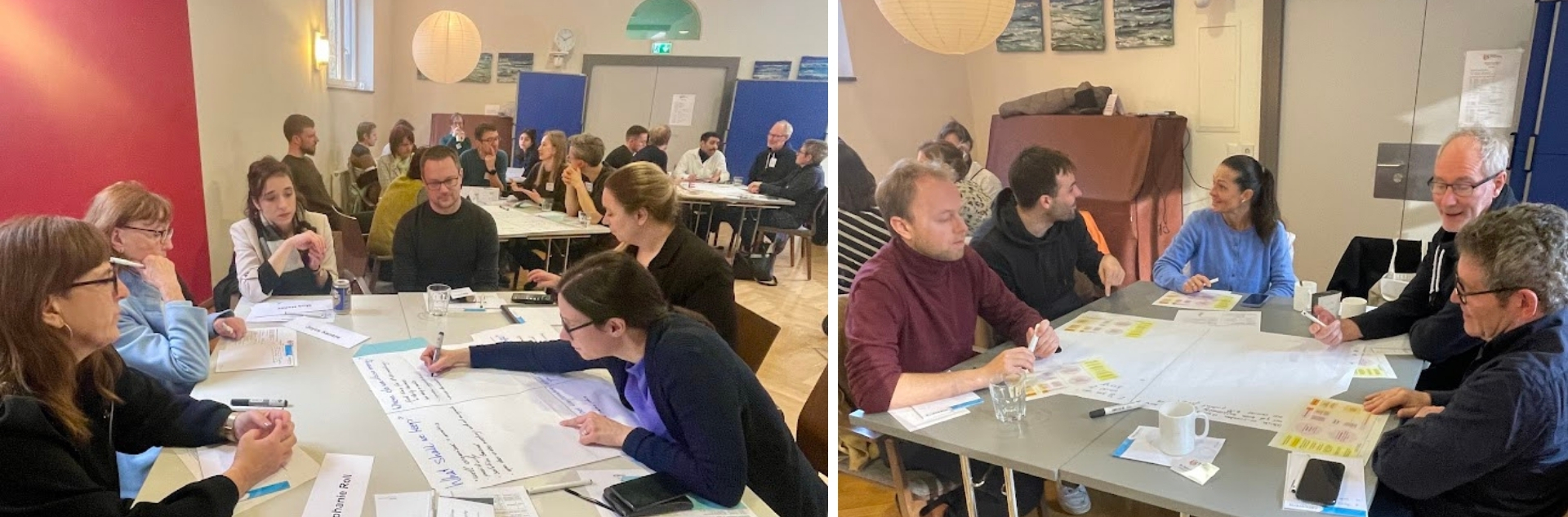
NOVA University Lisbon conducted a rapid review of existing social prescribing manuals and protocols to map the current evidence base. In parallel, workshops with members of each target group were held at three hubs: Aalborg Universitet, Universität Bern, and Charité Berlin. These workshops were designed to surface the genuine lived experiences and needs of participants, generating a set of detailed case vignettes that gave human form to the challenges each group faces.
2. Stakeholder Workshops on Intervention Adaptation
The case vignettes formed the basis for a second round of stakeholder workshops. Participants from across the consortium and the wider community came together to identify the adaptations needed to the core components of social prescribing. Discussions focused on patient and General Practitioner (GP) recruitment pathways, training requirements for GPs and Link Workers, and strategies to strengthen inclusion, accessibility, and equity. The sessions also examined appropriate outcome measures for each group.
3. Local Advisory Boards & Consensus Conference
Local Advisory Boards (LABs) were established across all ten hubs participating in the randomised controlled trials (RCTs). Each LAB reviewed the preliminary adaptations from Phase 2 and assessed their local feasibility – a vital step in ensuring recommendations were grounded in real-world conditions. Their feedback was clustered and thematically organised, then mapped against the Phase 2 workshop findings. The combined insights were then reviewed, evaluated, and formally approved at a final consensus conference held with the sponsor and representatives from all participating hubs and stakeholder groups.
The outcome of this process is a comprehensive set of evidence-informed, community-shaped recommendations for each of the three target groups. These recommendations now serve as the foundation for implementing the adapted social prescribing intervention across the European RCT.
What Happens Next?
With the co-creation phase complete and ethical approval granted, SP-EU will now focus on the implementation of the randomised controlled trial. Hub initiation and patient recruitment has begun across all of the ten hubs in eight countries:
Belgium – Croatia – Denmark – Germany – Poland – Portugal – Spain – Switzerland
Alongside the RCTs, a comparative qualitative study will be launched in five countries – Austria, Germany, Poland, Portugal, and the UK – to explore the conditions that enable social prescribing to be delivered effectively. Together, these strands will generate robust, cross-national evidence on how social prescribing can be adapted to reach and support those who need it most.
Read more about SP-EU’s qualitative study.