Becoming a Link Worker: Krystyna’s story
Author: Krystyna Kazandzhy
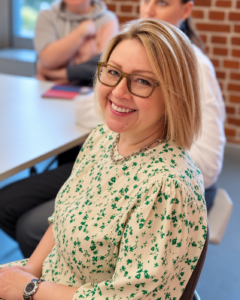
Krystyna Kazandzhy has recently started working as a link worker in Poland, as part of the SP-EU programme. She explains what motivated her to get involved.
In Poland, the SP-EU programme is exploring how social prescribing and link worker support can help people who may face barriers to accessing health, social and community services, including older people experiencing loneliness, LGBTQ+ people, refugees and first-generation migrants. The work focuses on identifying individual needs, reducing barriers to support and connecting people with appropriate local services, organisations and community resources. Krystyna’s role is part of this wider effort to develop more person-centred, inclusive and accessible support for different communities in Poland.
I have just started working as a link worker in a project supporting refugees and first-generation migrants in Poland. My role will involve helping people identify the difficulties and needs they are facing and, where appropriate, connecting them with relevant services, organisations and sources of support.
This role is particularly meaningful to me because I am also a first-generation migrant. I came to Poland almost five years ago, and I remember very well how overwhelming the beginning can be.
I had to deal with many different things myself: documents, organising everyday life, studying, confirming qualifications and documents from Ukraine, and simply trying to understand how things work in a new country. There were many moments of uncertainty, anxiety and the feeling that you had to solve everything on your own.
Looking back now, I realise how much easier some of those situations could have been if I had known where to go, whom to ask, or simply had someone to help me take that first step.
That is one of the reasons why I wanted to become a link worker. Sometimes a person doesn’t need someone to solve everything for them. They need someone who can listen, help them see the possibilities, point them in the right direction and encourage them to take the first step.
My training has already shown me how broad the role of a link worker can be and how many different aspects of a person’s life can affect their wellbeing. It is about seeing the person as a whole — their circumstances, worries, relationships, social situation and the things that may be affecting their wellbeing.
A link worker can help a person discover that there may be more possibilities and sources of support around them than they realised, while allowing the person to remain at the centre of decisions about their own life.
What excites me most is the possibility of helping people move from feeling stuck to seeing possibilities again.
Sometimes one conversation, one piece of information, or one connection to the right organisation can be the beginning of a much bigger change. A person’s situation may not change overnight, but when they are given the right direction and encouraged to take the first step, life can gradually begin to feel different and, as I like to think, start to show new and brighter colours.
I imagine that supporting people who may be anxious, overwhelmed or unfamiliar with the system will require patience, good listening skills and the ability to build trust.
As someone who has personally experienced migration, I hope that this experience will help me understand some of these feelings, while remembering that every person’s story is different. I also know that I will continue learning from my colleagues and from the people I work with.